Bedding & Sleep Climate
Waffle or Sateen? Choosing a Naturepedic Duvet Cover for Your Sleep Climate
A duvet cover is a small landscape of interlaced cotton: one weave rises into a softly ridged grid, another settles into a smooth, light-catching surface. The difference is tactile and visual, but it can also shape how bedding feels against the body and how comfortably it fits into a room’s wider sleep environment.
In a bedroom, comfort is rarely the work of a single object. The room’s temperature, the weight of the duvet insert, the fabric next to the skin, and the sleeper’s own habits all contribute to the night’s experience. A duvet cover cannot control the weather or determine sleep quality on its own, but it is one of the layers people notice most directly. Its weave affects surface texture, drape, airflow through the cloth, and the way the bed appears when morning light reaches it.
Naturepedic’s organic cotton duvet covers offer two distinct ways to dress that layer. The Organic Cotton Waffle Duvet Cover pairs a raised waffle weave on top with a smooth percale underside. The Organic Cotton Sateen Duvet Cover uses long-staple cotton woven into a smooth fabric with a subtle sheen. Both are made with organic cotton; the choice is less about declaring one universally cooler or more luxurious than the other and more about understanding how weave, layers, and personal preference meet.
That distinction matters because the word “temperature-regulating” can easily be asked to do too much. A cover is not a thermostat. It does not set bedroom temperature, and it cannot compensate for an insert that is too warm for a sleeper or a room that is poorly ventilated. Still, fabric has a physical presence: it can feel crisp, slick, textured, light, or enveloping. Those sensations influence whether bedding seems comfortable in a particular climate and whether it fits the sleeper’s routine.
First, understand what a weave changes
Cotton begins as a fiber, but the way that fiber is arranged into cloth gives the finished fabric much of its character. Weave influences surface appearance, hand feel, flexibility, and how much of the textile touches the skin at once. It can also influence how easily air moves through the fabric, though a duvet cover’s actual performance depends on more than weave alone: yarn, fabric density, finishing, the insert inside it, and the surrounding bedding all play a part.
A waffle weave creates a three-dimensional surface. Interlaced threads form small raised cells and recessed channels, producing a texture that is visible and easy to feel. The pattern gives the fabric depth and a relaxed, almost architectural quality. On the Naturepedic cover, the waffle texture is on the top side, while the underside is smooth percale. This two-sided construction offers a change in tactile character without requiring a second cover.
Sateen is made with a different arrangement of threads, commonly described by its longer floats across the surface. That construction gives cotton sateen its smooth hand and gentle sheen. The surface can feel more fluid than a textured weave and drape neatly over the duvet. Naturepedic describes its cover as long-staple, GOTS-certified organic cotton with a 400-thread-count sateen fabric and corner ties to help secure an insert. It is designed to grow softer with washing, according to its product information.
Neither weave is inherently a measure of quality in isolation. A fabric’s comfort depends on the whole construction and, ultimately, on the person using it. Thread count, too, is only one specification. It describes the number of threads in a square inch under a particular counting convention; it does not by itself tell you whether a textile will feel cool, durable, or pleasant. Fiber, yarn, weave, finishing, and care matter alongside the number.
The waffle cover: texture, air, and visual depth
Waffle cloth has a distinct sensory vocabulary. Its raised squares create a gentle irregularity beneath the hand, while the recesses give the surface a patterned relief. The texture can make a bed feel more relaxed than formally polished, even when the color palette is restrained. In a simple room, a waffle duvet cover can provide the visual interest that might otherwise come from a patterned blanket or a collection of decorative cushions.
The channels and raised areas also mean the fabric does not meet the skin in quite the same uninterrupted way as a smooth surface. Some sleepers enjoy this difference; others prefer fabric that feels even and sleek. Sensitivity is individual. A person who likes tactile materials may find waffle cotton inviting, while someone who prefers a cool, uniform surface may reach for sateen or percale instead.
The Naturepedic waffle cover combines its textured top with a smooth percale underside. That construction makes it possible to change the surface closest to the sleeper by turning or arranging the cover as intended. Percale is commonly appreciated for a crisp, matte feel, while the waffle side adds dimensional texture. The experience is therefore not simply “waffle versus smooth”: the cover itself brings both into the bed.
A raised texture is sometimes assumed to mean greater warmth, but that conclusion should be treated cautiously. Perceived warmth depends on how much fabric is in contact with the body, the fabric’s weight and density, the duvet insert, sleepwear, room conditions, and individual physiology. The waffle structure may feel different from smooth sateen, and the cover description presents it as breathable and suitable for all seasons, but no weave can guarantee a particular temperature experience for every sleeper or climate.
The sateen cover: smoothness, drape, and a quiet sheen
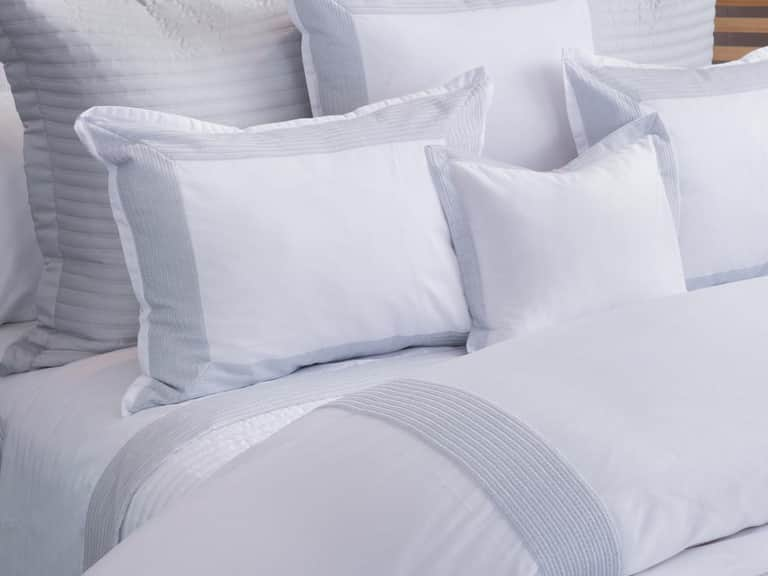
Sateen changes the mood of a bed through its surface. The fabric’s smoothness catches light softly, lending a subtle luminosity rather than a glossy, reflective finish. It tends to fall in a fluid way around the insert, creating a composed silhouette across the bed. In a room with clean lines and uncluttered furnishings, that drape can make the bedding feel quietly tailored.
For sleepers who prefer a smooth sensation, sateen may feel familiar and comforting. It does not have the raised cellular texture of waffle cloth, so the contact surface is more consistent. The Naturepedic cover is made from long-staple organic cotton in a four-over-one sateen construction, and its product description notes a 400-thread-count fabric, natural wrinkle resistance, and a breathable, moisture-wicking feel. These are characteristics of the fabric as presented, not a promise that it will keep every sleeper cool in every room.
Sateen can be a thoughtful choice when appearance and a smooth hand matter as much as practical comfort. Its subtle sheen can make neutral colors feel richer and can introduce contrast beside matte-painted walls, linen curtains, or a textured wool throw. The finish is restrained enough to work in both traditional and contemporary rooms. It does not need elaborate styling: one well-chosen textile can give a bed a finished look.
Some people associate a smooth or slightly heavier-feeling fabric with warmth. Others notice the softness and prefer it in cooler months, or enjoy it year-round. These impressions can coexist because comfort is personal and context-dependent. If you tend to feel warm at night, assess the entire bedding system before attributing the sensation to the cover alone. A thick insert, multiple blankets, warm sleepwear, and limited airflow may have a greater effect than the difference between two cotton weaves.
Match the cover to the room you actually sleep in
“Sleep climate” is not only a map of local weather. It is the set of conditions around a sleeper at bedtime: the room’s temperature and humidity, whether heating or cooling runs through the night, how much air circulates, how warm the mattress and duvet feel, and how the sleeper responds to changes in temperature. Two people in the same house can experience the same bedroom differently.
Begin with observation rather than assumptions. If you regularly wake feeling too warm, note whether the duvet is thick, whether you use extra layers, and whether the room is stuffy. If you tend to feel chilly, consider whether the bedding provides enough insulation and whether cold air moves across the bed. A short record over several nights can help separate recurring patterns from one unusually warm or cold evening.
Then consider how you want the fabric to feel. A sleeper who values a pronounced texture and a more relaxed, tactile bed may prefer the waffle cover. Someone who wants a smooth, gently lustrous surface may gravitate toward sateen. A person who is undecided might find the waffle cover’s two-sided construction appealing because it offers a textured top and a smooth percale underside. These are preference-based starting points, not rigid rules based on geography.
In a warm bedroom, look at the entire sleep setup. A lighter duvet insert, fewer layers, breathable sleepwear, and comfortable room conditions may be more consequential than choosing one cover weave over another. In a cooler bedroom, an appropriately warm insert and an added blanket can provide insulation without requiring the cover itself to carry that burden. Seasonal adjustments are often easier when the cover remains a familiar layer and the insert changes.
Think in layers, not single products
A duvet cover works as part of a system. The insert supplies most of the bed’s insulating bulk; the cover encases it, protects it from everyday contact, and gives the sleeper a particular surface to touch. Sheets add another layer between the body and duvet, while blankets, mattress protectors, pillows, and sleepwear shape the total sensation.
That system can be adjusted in small steps. If the bed is too warm, try removing a throw or choosing a lighter insert before replacing all the bedding. If the duvet shifts inside the cover, use the corner ties, when provided, to help secure it. If the surface feels too textured or too smooth, changing the cover can address that specific tactile preference without altering the mattress or the room’s decor.
The cotton sheet beneath the duvet matters as well. Percale sheets often have a crisp, matte feel, while sateen sheets tend to feel smoother. Pairing a smooth sheet with a textured waffle cover can create a deliberate contrast; combining sateen sheets and a sateen cover creates a more continuous, fluid surface. Neither arrangement is more correct. The useful question is whether the layers feel comfortable together and whether the bed suits the way you sleep.
For couples, a shared cover may be the point where preferences meet. One person may prefer a cool, crisp sensation while the other wants more softness or warmth. Instead of treating the choice as a contest between weaves, consider whether each sleeper can adjust their own blanket or sleepwear, and whether the insert is suitable for both. A cover can refine the shared bed, but it cannot remove differences in how people experience temperature.
Care is part of comfort
A cover is handled frequently, washed regularly, and exposed to the friction of sleep. Care instructions are therefore part of the decision, not a footnote. Naturepedic lists machine washing in warm water and tumble drying on low for its organic cotton duvet covers. The sateen cover instructions also advise warm ironing if needed and no bleach. Always check the current label for the specific cover, since care guidance can vary by item and may be updated.
Before washing, close fastenings and consider turning the cover inside out if that is compatible with its instructions. Avoid overloading the washing machine, which can prevent bulky bedding from moving freely. Using the recommended detergent and drying settings can help preserve the fabric’s hand and appearance. If you prefer a crisp finish, remove the cover promptly at the end of the drying cycle; if natural softness and a relaxed look suit the room, a little texture may be welcome.
Organic certification addresses how a product’s materials and production are assessed under a particular standard; it does not determine whether a fabric will feel cool or soft to a given sleeper. Naturepedic describes both covers as made with GOTS-certified organic cotton. That information may be important to readers considering fiber sourcing and manufacturing standards, while weave and construction remain the more direct clues to the cover’s tactile character.
A duvet cover can also simplify routine care by providing a washable outer layer around an insert. The frequency of washing depends on the household, climate, personal habits, and use of sheets. Follow the care label and allow bedding to dry fully before making the bed. A cover that is easy to maintain is more likely to remain a practical part of the bedroom rather than a delicate object reserved for special occasions.
A considered way to choose
Before deciding between waffle and sateen, ask four questions. First, what surface do you enjoy against your skin: textured and dimensional, or smooth and even? Second, what do you already know about your bedding habits: do you pile on layers, use a substantial insert, or prefer a light cover? Third, what does the room feel like overnight, not merely at bedtime? Finally, how much time do you want to spend on laundry and finishing?
- Consider waffle if a raised, tactile surface appeals to you, if you want visible texture without a busy print, or if the combination of waffle on top and smooth percale beneath suits your preferences.
- Consider sateen if you like a smooth hand, fluid drape, and a subtle sheen, or if a polished, continuous surface feels most inviting in your bedroom.
- Review the whole bedding system if temperature is the main concern. The insert’s warmth, extra blankets, sheets, sleepwear, ventilation, and room conditions all contribute.
- Check care details before choosing, especially if you wash bedding frequently or prefer to avoid ironing and special handling.
If possible, handle comparable fabrics in person. A description can explain weave and construction, but it cannot reproduce the way cloth feels to your hand. If you cannot touch samples, think about textiles you already enjoy: a crisp cotton shirt, a smooth pillowcase, a waffle towel, or a soft duvet cover you have used before. These familiar references can make a decision more concrete.
Let the bedroom remain a living environment
A refined bedroom does not need to be frozen in a perfect arrangement. It is a working environment for rest, changing with the seasons and the routines of the people who use it. A duvet cover is one of the simplest elements to adjust: it can change the bed’s texture, color, and overall mood while leaving the larger room intact.
Waffle and sateen offer different answers to the same practical question. One introduces a raised grid and a sense of texture; the other emphasizes smoothness, drape, and quiet luminosity. Both can belong in a comfortable bedroom. The deciding factors are the tactile quality you prefer, the way your other layers behave, the temperature conditions you experience, and how you care for bedding from week to week.
Think of the choice not as a contest between a “cool” fabric and a “warm” one, but as an experiment in the small details of comfort. Start with your current routine, change one layer at a time, and notice how the bed feels over several nights. In this quiet form of observation, design and sleep wellness meet: the bedroom becomes less a display and more a place tuned to the realities of rest.
The most suitable Naturepedic duvet cover is ultimately the one that feels right in your own sleep climate. For a tactile, dimensional bed, explore the organic cotton waffle duvet cover. For a smoother surface with a gentle sheen, consider the organic cotton sateen duvet cover. Either can provide a thoughtful foundation for bedding that is calm in appearance, comfortable in use, and adaptable to the changing conditions of a real bedroom.